Saturday, April 28, 2007

Why Do We Chant HARE KRISHNA?


Ladies and gentlemen, this Krsna conscious movement is reviving our original consciousness. At the present moment, due to our long association with matter, the consciousness has become contaminated, just like when the rain water falls down from the cloud, the water is uncontaminated, distilled water, pure, but as soon as the water falls down on this earth, it becomes mixed up with so many dirty things. When the water falls it is not salty, but when it is touched with the matter or earth, it becomes salty, or tasty, or something like that. Similarly, originally, as spirit soul, our consciousness is uncontaminated, but due to our association with the matter at the present moment, our consciousness is contaminated. Therefore we have got so many varieties of consciousness. Disagreements between one person to another is due to this contaminated consciousness. I think some way; you think otherwise. Therefore we do not agree. But originally, your consciousness and my consciousness were one. And what is that one? That conscious, pure consciousness, is "God is great, and I am His eternal servant." That is pure consciousness. As soon as we want to imitate or artificially want to become one with God, immediately the contamination begins. There is a Bengali verse in which it is stated that,

krsna bhuliya jiva bhoga vancha kare
pasate maya tare japatiya dhare

The English translation is that "When an individual soul forgets his eternal relationship with God and tries to lord it over the material nature or resources, that condition, that forgetful condition, is called maya, or illusion." So at the present moment, especially in this age, the forgetfulness of our eternal relationship with God is very strong. And by chanting this transcendental sound, Hare Krsna, the first installment is that our heart or the mind becomes cleansed of all dirty things. This is not a theoretical proposition, but it is a fact. If you go on chanting this mantra, Hare Krsna, it is not difficult. Although it is pronounced in Sanskrit language, everyone can chant it just like in this meeting we began to chant, and you also joined with us. Here, all my students, they are all Americans. None of them are Indian, but still, they have learned it very nicely, and it is not difficult. And there is no expenditure.

So what is this Hare Krsna? Hare means the energy of the Lord, and Krsna means the Supreme Personality of Godhead. So it is a prayer. There are three words only: Hare, Krsna and Rama, three words. That has been arranged in sixteen words: Hare Krsna, Hare Krsna, Krsna Krsna, Hare Hare/ Hare Rama, Hare Rama, Rama Rama, Hare Hare. So our movement is that we request you to take up these sixteen words- not sixteen words, three words, Hare, Krsna, Rama. But is is arranged in such a way that there are sixteen words. So anyone can take it by heart, these three words, and chant it. It is universal. And if you think that "Oh, Krsna is the name of Hindu god," if you have got any objection, then you may not chant Krsna, but you must have a name for God. Just like somebody, the Muhammadans, call Allah, the Jews call jehovah, or somebody calls something. That doesn't matter. If you think that "Why shall I chant the Indian name Krsna, Sanskrit name Krsna?" so Lord Caitanya says that there are millions and billions of names of God. If you think that this Krsna name is not very suitable, you can accept any name. That doesn't matter.

Our proposition is you chant God's name. That is our proposal. Therefore it is universal. If you like, you can chant jehovah or you can chant Allah, but we request you that you chant God's name. Is it very difficult? It is not at all difficult. Lord Caitanya said that there are innumerable names of God according to different languages, different countries, different societies. And each and every one of them has the potency of God Himself. If there is any God, so God is Absolute; therefore there is no difference between His name and He Himself. Just like in the material world, in the world of duality there is difference between the name "water" and the substance water. The name water is different from the substance water. If you are thirsty, if you simply chant, "Water, water, water, water," your thirstiness will not be quenched. You require the substance water. That is material, but spiritually, the name Krsna or the name Allah or the name jehovah is as good as the Supreme Personality of Godhead.

Therefore if you chant Hare Krsna... You may inquire why we are chanting Hare Krsna. Hare Krsna, this name, was chanted by Lord Caitanya, who introduced this movement five hundred years ago in India. We are following the footprints of Lord Caitanya. Because He chanted Hare Krsna, therefore we are chanting Hare Krsna. But Lord Caitanya has recommended that God has innumerable names, and any one of them can be chanted, and there is no hard and fast rules and regulations for chanting. It is not that you have to prepare yourself or you have to educate yourself or you have to adjust yourself for chanting. No. Everyone. Just like immediately we began to chant. You were not prepared, but you joined with us, you clapped with us, you danced with us. So similarly, there is no preoccupation or any rules and regulation. You simply chant. And this is very easy. While walking, you can chant whatever name you like. We like Krsna. We chant always: Hare Krsna, Hare Krsna, Krsna Krsna, Hare Hare/ Hare Rama, Hare Rama, Rama Rama, Hare Hare. While walking the streets, while you are going in the bus, and whatever, even while working with your hands, you can chant. There is no loss on your part. There is no expenditure on your part, but the gain is very great. Why don't you try it? Try it. That is our request.

So the benefit will be that gradually you shall understand what you are. The whole civilization, modern civilization, is going on under a wrong impression that "I am this body." In Srimad-Bhagavatam it is said that "One who goes on with the concept of the body, he is no better than an ass or cow." Yasyatma-buddhih kunape tri-dhatuke... [SB 10.84.13]. It is a very long verse. But actually we are not this body. So if we chant this mantra, Hare Krsna, then I can understand what I am. And as soon as I understand that I am not this body, then my activities become different, because at the present moment I am acting on the concept of my life as this body. Because this body is born of a particular place in a particular country, therefore I am saying that "I am American," or "Indian," or "China" or "German," due to this body. And because I have got relationship with some woman with this body, therefore I accept the woman as my wife. There are hundreds of thousands of women, but the woman who has got relationship with this body is my wife. There are thousands and millions of children, but one child who has got intimate relation with this body I call my son. So if the body falsely identified, then we can understand that our identification with this world is also false. The real identification is, as it is stated in the Vedic literature, aham brahmasmi: "I am Brahman." "I am Brahman" means "I am spirit soul. I am not this matter." So this misconception has to be removed. Of course, it is not possible that everyone will understand or everyone will be able to understand it, but even a certain percentage of the human society can understand, immediately there is solution of so many problems- to understand aham brahmasmi. And how that solution is made, that is described in the Bhagavad-gita.

This Bhagavad-gita is the science of God. Just like in your Christian Bible or any other scriptures, Muhammadan or Christian or Jews or Buddhists... So aham brahmasmi means that "I am spirit soul," this realization. As soon as this realization is there, then the other things immediately follow. What is that? Brahma-bhutah prasannatma [Bg. 18.54]. Immediately one becomes cheerful. So long we have got this bodily concept of life, we cannot be cheerful. Full of anxiety. And as soon as we understand that "I am not this body; I am spirit soul," the next moment you will be cheerful. There will be no anxiety. I am full of anxiety because on account of this bodily concept of life. Just like one man has got very costly motorcar, and he is running the car on the street. He is very careful so that there may not be any accident in the car, the car may not break. So much anxiety. But a man who is walking on the street, he has no such anxiety. Why the man in the car is so anxious? Because he has identified himself with the car. If the car, if there is any accident to the car, if the car breaks, he thinks, "I am gone. Oh, my car is gone." Although he is different from car, he thinks like that due to identification, false identification. Similarly, because we are falsely identified with this body, therefore we have got so many problems of life. So if we want to make solution of the problems of life, then we have to understand what I am. And unless this question arises in your mind- not only in your mind, everyone's mind- then we should, we must consider that whatever we are doing, that is our defeat because we are doing everything in false consciousness.

In the Srimad-Bhagavatam it is said, parabhavas tavad abodha-jatah. Abodha-jatah means one who is born fool. Every one of us is a born fool. Why? From the beginning of our life I know that "I am this body," although I am not this body. Therefore we are all born fools, everyone. And therefore, according to Vedic civilization, one has to take his second birth. One birth is made possible by conjugation of the father and mother. That birth is called animal birth. Janmana jayate sudrah. Everyone, by birth, is sudra, or the lowest class of man. And samskarad bhaved dvijah: "By reformation, one becomes twice-born." And what is that reformation? By understanding oneself, "What I am." Samskarad bhaved dvijah, veda-pathad bhaved viprah: "And after twice, after his second birth, if he tries to understand the spiritual science, the science of God, then he is called vipra." Vipra means quite congnizant. And brahma janatiti brahmanah: "And when he understands that he is Brahman, he is spirit soul, then he becomes a brahmana." Perhaps you have heard that in India the brahmanas are called the topmost men of the society. Why? Because he knows that "I am Brahman; I am not this matter." Brahma janatiti brahmanah. So by understanding Brahman your position will be that prasannatma, you'll be joyful, na socati na kanksati, you will never lament any loss, neither you will hanker after any so-called gain, na socati na kanksati, samah sarvesu bhutesu, and you will look every living entity on the same level. Mad-bhaktim labhate param [Bg. 18.54]. In that stage of realization, you can understand what is God and what is your relationship with God.

Therefore this movement is that one understands himself what he is. It is, of course, very plain question and answer. The other day we had some lectures in a, one Sunday school, and I called one, a small boy, and I asked him that "What is this?" He said, "It is my hand, it is my head, it is my leg, it is my body, it is my pants, it is my..." And I asked him, "Where you are? You are simply saying ‘my, my, my,' and where you are?" So similarly, everyone can understand that what I am? If you think yourself, if you meditate on yourself, if you see your hand, "Am I this hand?" you will say, "No, it is my hand." "Am I this leg?" You will say, "No, it is my leg." "Am I this head?" "No, it is my head." Then where you are? So that person who is thinking within that "It is my hand, it is my head, it is my leg, it is my pant, it is my coat," that you are. So have you seen that thing? You have seen your father, you have seen your mother or you have seen your son. But have you seen the real father who is within the body of the father? Have you seen the real son which is in the body of the son? No. Then your whole conception of education, your whole conception of living condition and problems- in the false world. Therefore this movement is required at the present moment in the world. Ceto-darpana-marjanam [Cc. Antya 20.12].

This will cleanse the status of your mental condition. Ceto-darpana-marjanam bhava-maha-davagni-nirvapanam. And as soon as you understand yourself, then the whole problem- social, political, economical- everything will be solved. Bhava-maha-davagni-nirvapanam sreyah-kairava-candrika-vitaranam. And gradually you shall realize your transcendental life. Your transcendental life is joyful. Ananda-mayo 'bhyasat. Transcendental life means always full of joy, joyful. That is our nature. We are hankering after joyful life, but we do not know where to hanker, how to get it. By nature we are joyful. It is said in the Vedanta-sutra, anandamayo 'bhyasat: "By nature a living entity is joyful." But my joyfulness is covered by this material understanding. So I have to remove this material understanding; then again I shall become joyful.

So this movement is very scientific movement, and we have got authoritative statements. You cannot defy authority, authority. As an authority, minister of this Unitarian Church, in one place he has denied authority, and in another place he has quoted so many authorities. So many authorities he has quoted. Why? If you deny authority, then why you quote other authority? So you cannot defy authority. This is not possible. From the beginning of your life, when you were child, you asked your parents, "Mother, father, what is this?" Why? That is the beginning of life. You cannot go even a step without authority. You are governed by authority. You are running your car by authority- "Keep to the right." Why? Why don't you defy it? So authority we have to obey. But the difficulty is: who is authority? That we require to learn who is actually authority. So authority means who has no mistakes, who has no illusion, who does not cheat, and whose senses are perfect. That is authority. That is the definition of authority. A conditioned soul who... Just... "To err is human." Any human being is sure to commit mistakes. However learned he may be, however advanced he may be, he must commit mistake. Therefore this word is, "To err is human." And one must be illusioned. And there is cheating propensity of every man. Even a child, he wants to cheat. The mother asks, "Oh, what is in your hand?" Oh, the child says, "No, mother, nothing," although the mother can see he has got something. So the cheating propensity is there. And above all, your senses are imperfect. You are proud of your eyes: "I want to see." What you can see? If the light is off, your seeing power is immediately gone. If there is no sun, your seeing power is gone. Therefore we see under conditions. Therefore imperfect.

So you cannot get perfect knowledge by imperfect senses, by speculative knowledge. You have to accept authority. Just like if you want to know who is your father, the authority is your mother. The mother says, "Here is your father." You have to accept. You cannot make research. Mother is the last authority, who is your father. Similarly, we have to accept authority, and if the authority is not a conditioned soul, if he is liberated soul, if he is not a cheater, if his senses are not imperfect, if he does not make any mistakes, if he is not in illusion, if you receive knowledge from that authority, then your knowledge is perfect. That is the process.

So we have got such authoritative, I mean to say, literature, Vedic literatures. You can test it by your reason, by your arguments, by your philosophical talks, everything. Religion without philosophical basis, without scientific basis, is sentiment. That religion based on philosophy and science, that is right. So Bhagavad-gita is that book. Any question, any inquiry, any doubt- all the answers are there, and very nicely. Just like one or two verse I shall explain to you. In one place Bhagavad-gita says that..., the Lord says that,

sarva-yonisu kaunteya
sambhavanti murtayo yah
tasam mahad yonir brahma
aham bija-pradah pita
[Bg. 14.4]

The Lord says that there are eight hundred, er, 8,400,000 species of life, different forms of life, species of life. There are aquatics, there are plants, trees, worms, germs, then birds, beasts, and at last, the human species of life, only 400,000's. So Krsna says that "All the species of life- never mind whether he is man or he's a dog, he's a cat- he's a living entity, and I am the seed-giving father of all living entities." Now, how nice, you can understand simply. This verse, if you can understand, then you can have some idea of universal brotherhood. If you want to make universal brotherhood, you must find out the center- the universal father. So these questions and answers are there, and we have got the science of God, the education of science of God, Srimad-Bhagavatam. So these books are meant for human society, and if you take advantage of the knowledge imparted in this book and if you chant this Hare Krsna mantra, you will see how your life becomes improved, how you become full of knowledge, full of bliss, and how you advance in your eternal life.
Thank you very much. If any question, you can make

Tuesday, April 17, 2007

Humbug Civilization for Temporary Happiness


Prahlada Maharaja continues: “There is only one source of anxiety for me.” Just see—although he had no anxiety for himself, he still had anxiety. He says, soce tato vimukha-cetasah: “I am anxious for those persons who are not Krsna conscious. That is my anxiety. for myself I have no anxiety, but I am thinking of those who are not Krsna conscious.” Why aren’t they Krsna conscious? Maya-sukhaya bharam udvahato vimudhan [SB 7.9.43]. These rascals have created a humbug civilization for temporary happiness.

Maya-sukhaya. Actually this is a fact. We have a humbug civilization. So many cars are being manufactured every year, and for that purpose so many roads have to be excavated and prepared. This creates problem after problem. Therefore it is maya-sukhaya, illusory happiness, and yet we are trying to be happy in this way. We are trying to manufacture some way to be happy, but this only creates other problems.

In your country you have the greatest number of cars, but that does not solve any problems. You have manufactured cars to help solve the problems of life, but I have experienced that this also creates more problems. When my disciple Dayananda wanted to take me to a doctor in Los Angeles, I had to take the trouble to travel thirty miles before I could even consult the doctor. Once you create cars, then you must travel thirty or forty miles to meet your friends.
You can fly from New York to Boston in one hour, but it takes even longer than that just to get to the airport. This situation is called maya-sukhaya. Maya means “false,” “illusory.”

We are trying to create some very comfortable situation, but we have created another uncomfortable situation. This is the way of the material world; if we are not satisfied by the natural comforts offered by God and nature and we want to create artificial comforts, then we have to create some discomfort also. Most people do not know that. They think that they are creating a very comfortable situation, but actually they are traveling fifty miles to go to the office to earn a livelihood and fifty miles to come back. Because of such conditions, Prahlada Maharaja says that these vimudhans—these materialistic persons, these rascals—have created an unnecessary burden on themselves simply for temporary happiness. Vimudhan, maya-sukhaya bharam udvahato. Therefore, in Vedic civilization it is recommended that one free himself from material life, take sannyasa, the renounced order of life, and prosecute spiritual life with absolutely no anxiety.

If one can execute Krsna consciousness in family life, that is very good. Bhaktivinoda Thakura was a family man, a magistrate. and still he executed devotional service so nicely. Dhruva Maharaja and Prahlada Maharaja were grhasthas, householders, but they trained themselves in such a way that even as householders they were faced with no interruption in their service. Therefore, Prahlada Maharaja says, “I have learned the art of always remaining in Krsna consciousness.” What is that art?

Tvad-virya-gayana-mahamrta-magna-cittah. Simply glorifying the victorious activities and pastimes of the Lord. Virya means “very heroic.”
[Science of Self Realization. CH.7]

Wednesday, April 11, 2007

Who is the Authority?


"...even the most advanced scientist depends on the statements of authorities. Science begins on some definite data, just like Sir Isaac Newton discovered the law of gravitation, and so much scientific advancement depends on such authoritative statements. So even scientific knowledge has to stand on the evidence of authority. He admits that we are all spirit soul inside the body entrapped, and he believes this body is composed of various chemicals about which we know a great deal. But unfortunately, with all this chemical combinations combined together, we can not produce a body like this; this is also a scientific fact. Just like rasgulla is a milk product everyone knows. But how to make a rasgulla from milk requires expert further knowledge. Therefore, simply to know that this body is made of chemicals is not sufficient knowledge.

When one can reproduce a similar body with the known chemicals, then he is to be considered as the expert scientist. The spirit soul is impossible to find out by materialistic scientific means, but if one will hear from the right authority, he may understand. The gentleman is disappointed that probably no one will ever know about spirit, but this is not true. We know what is spirit, how does it work, how does it transmigrate from one body to another or from one planet to another.

We know these very scientifically, and we are firmly convinced about it. We can refute any dogmatic arguments against this conviction, and how do we do that? Simply because we start our understanding from the data of authoritative sources like Krishna or His representative.

In the Bhagavad-gita, Lord Krishna speaks about spirit soul from the very beginning. Unless one understands what is this spirit soul, his further advancement of the Supreme Spirit God has no value. So this gentleman is puzzled in his understanding about wherefrom we have come, what we are, and where we are going. But we are certain about it. So if he wants to know all these things, there is bona fide source for understanding these problems, providing he agrees to give a submissive aural reception to the respective authorities as much as he believes in the authoritative statements of Sir Isaac Newton.

So either to accept the statements of Sir Isaac Newton or the statements of Lord Krishna, the beginning is a kind of faith. Unfortunately, these so-called scientific men can usually pin their faith on Sir Isaac Newton but not to the statements of Krishna or his representatives."

Letter to: Govinda
--
Los Angeles
10 February, 1969
69-02-10

Monday, March 19, 2007

Plain Living & High Thinking


udarah sarva evaite

jnani tv atmaiva me matam
asthitah sa hi yuktatma
mam evanuttamam gatim

“All these devotees are undoubtedly magnanimous souls, but he who is situated in knowledge of Me I consider verily to dwell in Me. Being engaged in My transcendental service, he attains Me.” (Bg. 7.18)

Here Krsna is saying that all the men who come to Him—whether they be distressed, in need of money, curious, etc.—are welcomed, but out of them the person who is in knowledge is very dear to Him. The others are welcomed because it is understood that in course of time, if they continue on the path to God, they will become as good as the man of knowledge. Generally, however, it so happens that when one goes to church for profit, and the money doesn’t come, he concludes that approaching God is nonsense, and he gives up all connection with church.

That is the danger of approaching God with ulterior motives. For instance, during World War II it was reported that many wives of the German soldiers went to church to pray for their husbands’ safe return, but when they found they had been killed in battle, they became atheistic. Thus we want God to become our order-supplier, and when He does not supply our order, we say that there is no God. That is the effect of praying for material things.

In this connection there is a story of a little boy, about five years old, named Dhruva, who belonged to a royal family. In the course of time his father, the king, tired of his mother and deposed her as his queen. He then took another woman as queen, and she became stepmother to the boy. She was very envious of him, and one day, as Dhruva was sitting on the father’s knee, she insulted him. “Oh you cannot sit on the lap of your father,” she said, “because you are not born of me.” She dragged Dhruva from his father’s lap and the boy became very angry. He was the son of a ksatriya, and ksatriyas are notorious for their quick tempers. Dhruva took this to be a great insult, and he went to his mother who had been deposed.

“Dear Mother,” he said, “my stepmother has insulted me by dragging me from my father’s lap.”

“Dear son,” the mother replied, “what can I do? I am helpless, and your father no longer cares for me.

“Well, how can I take revenge?” the boy asked.

“My dear boy, you are helpless. Only if God helps you can you take revenge.”

“Oh, where is God?” Dhruva asked enthusiastically.

“I understand so many sages go to the jungle and forest to see God,” the mother replied. “They undergo great penances and austerities in order to find God there.”

At once Dhruva went to the forest and began asking the tiger and the elephant, “Oh, are you God? Are you God?” In this way he was questioning all the animals. Seeing that Dhruva was very much inquisitive, Sri Krsna sent Narada Muni to see about the situation. Narada quickly went to the forest and found Dhruva.

“My dear boy,” Narada said, “you belong to the royal family. You cannot suffer all this penance and austerity. Please return to your home. Your mother and father are very much anxious for you.”

“Please don’t try to divert me in that way,” the boy said. “If you know something about God, or if you know how I can see God, please tell me. Otherwise go away and don’t disturb me.”
When Narada saw that Dhruva was so determined, he initiated him as a disciple and gave him the mantra, om namo bhagavate vasudevaya. Dhruva chanted this mantra and became perfect, and God came before him.

“My dear Dhruva, what do you want? You can take from Me whatever you want.”

“My dear Lord,” the boy replied, “I was undergoing such severe penances simply for my father’s kingdom and land, but now I have seen You. Even the great sages and saints cannot see You. What is my profit? I left my home to find merely some scraps of glass and rubbish, and instead I have found a very valuable diamond. Now I am satisfied. I have no need to ask anything of You.”

Thus even though one may be poverty-stricken or in distress, if he goes to God with the same determination as Dhruva, intent on seeing God and taking His benediction, and if he happens to see God, he will no longer want anything material. He comes to understand the foolishness of material possessions, and he puts the illusion aside for the real thing. When one becomes situated in Krsna consciousness, like Dhruva Maharaja, he becomes fully satisfied and doesn’t want anything.

The jnani, the wise man, knows that material things are flickering. He also knows that there are three aspects that complicate all material gain—one wants profit from his work, one wants adoration from others because of his riches, and one wants fame because of his wealth. In any case, he knows that all of these apply but to the body and that when the body is finished, they also go. When the body dies, one is no longer a rich man but a spirit soul, and according to his work, he has to enter another body. The Gita says that a wise man is not bewildered by this, for he knows what is what. Why then should he bother himself attaining material wealth? His attitude is, “I have an eternal connection with Krsna, the Supreme Lord. Now let me establish that relationship firmly so that Krsna will take me back to His kingdom.”

The cosmic situation is giving us all facility to reestablish this relationship with Krsna and return to Godhead. This should be our mission in life. Everything we need is bring supplied by God—land, grain, fruits, milk, shelter and clothing. We only have to live peacefully and cultivate Krsna consciousness. That should be our mission in life. We should therefore be satisfied with what God has supplied in the form of food, shelter, defense and sex, and should not want more and more and more. The best type of civilization is one that ascribes to the maxim of “plain living and high thinking.” It is not possible to manufacture food or sex in a factory. These and whatever else we require are supplied by God. Our business is to take advantage of these things and become God conscious.

Although God has given us all facilities to live peacefully on this earth, cultivate Krsna consciousness, and finally to come to Him, in this age we’re unfortunate. We are short-lived, and there are so many people without food, shelter, married life or defense from the onslaughts of nature. This is due to the influence of this age of Kali. Therefore Lord Caitanya Mahaprabhu, seeing the dreadful situation in this age, emphasized the absolute necessity for cultivating spiritual life. And how should we do it? Caitanya Mahaprabhu gives the formula:

harer nama harer nama
harer namaiva kevalam
kalau nasty eva nasty eva
nasty eva gatir anyatha
[Adi 17.21]

“Just always chant Hare Krsna.” Never mind whether you are in a factory or in a hell, in a shack or in a skyscraper—it doesn’t matter. just go on chanting Hare Krsna, Hare Krsna, Krsna Krsna, Hare Hare/ Hare Rama, Hare Rama, Rama Rama, Hare Hare. There is no expense, there is no impediment, there is no caste, there is no creed, there is no color—anyone can do it. just chant and hear.

Somehow or other, if one comes into contact with Krsna consciousness and executes the process under the guidance of a bona fide guide, he is sure to go back to God.

[From: "On the Way to Krsna" Ch.5, By His Divine Grace AC Bhaktivedanta Swami Prabhupada, Founder Acarya for the International Society for Krsna Consciousnesss]

Monday, March 12, 2007

Seeing Me


[from Srimad Bhagavatam 7.4.25]
ma bhaista vibudha-sresthah
sarvesam bhadram astu vah
mad-darsanam hi bhutanam
sarva-sreyopapattaye
jnatam etasya dauratmyam
daiteyapasadasya yat
tasya santim karisyami
kalam tavat pratiksata

SYNONYMS

ma—do not; bhaista—fear; vibudha-sresthah—O best of learned persons; sarvesam—of all; bhadram—the good fortune; astu—let there be; vah—unto you; mat-darsanam—the seeing of Me (or offering of prayers to Me or hearing about Me, all of which are absolute); hi—indeed; bhutanam—of all living entities; sarva-sreya—of all good fortune; upapattaye—for the attainment; jnatam—known; etasya—of this; dauratmyam—the nefarious activities; daiteya-apasadasya—of the great demon, Hiranyakasipu; yat—which; tasya—of this; santim—cessation; karisyami—I shall make; kalam—time; tavat—until that; pratiksata—just wait.


TRANSLATION

The voice of the Lord vibrated as follows: O best of learned persons, do not fear! I wish all good fortune to you. Become My devotees by hearing and chanting about Me and offering Me prayers, for these are certainly meant to award benedictions to all living entities. I know all about the activities of Hiranyakasipu and shall surely stop them very soon. Please wait patiently until that time.

PURPORT

Sometimes people are very much eager to see God. In considering the word mad-darsanam, “seeing Me,” which is mentioned in this verse, one should note that in Bhagavad-gita the Lord says, bhaktya mam abhijanati [Bg. 18.55]. In other words, the ability to understand the Supreme Personality of Godhead or to see Him or talk with Him depends on one’s advancement in devotional service, which is called bhakti. In bhakti there are nine different activities: sravanam kirtanam visnoh smaranam pada-sevanam/ arcanam vandanam dasyam sakhyam atma-nivedanam [SB 7.5.23]. Because all these devotional activities are absolute, there is no fundamental difference between worshiping the Deity in the temple, seeing Him and chanting His glories. Indeed, all of these are ways of seeing Him, for everything done in devotional service is a means of direct contact with the Lord. The vibration of the Lord’s voice appeared in the presence of all the devotees, and although the person vibrating the sound was unseen to them, they were meeting or seeing the Lord because they were offering prayers and because the vibration of the Lord was present. Contrary to the laws of the material world, there is no difference between seeing the Lord, offering prayers and hearing the transcendental vibration. Pure devotees, therefore, are fully satisfied by glorifying the Lord. Such glorification is called kirtana. Performing kirtana and hearing the vibration of the sound Hare Krsna is actually seeing the Supreme Personality of Godhead directly. One must realize this position, and then one will be able to understand the absolute nature of the Lord’s activities.

Saturday, January 20, 2007

Thinking of KRSNA


Prabhupada:
[ARJUNA]...he was personal friend of Krsna. Just try to understand how much qualified he was. Not only that, he belonged to the royal family. He was a great warrior, great hero, so many qualities. But he said that “I cannot practice this yoga system. It is not possible. I cannot control my mind and practice this hatha-yoga system.”

Now just try to understand. He is such a personality, great personality, and five thousand years ago, when things were so nice. So at that time a person like Arjuna felt that he’s unable to practice this yoga system. And nowadays a (indistinct) people with teeny knowledge, they are trying to practice yoga system as if they’re..., he has become more than Arjuna. It is very difficult subject matter. It is not possible for ordinary man. The first principle is that he has to sit down alone in a sacred place, alone. Yoga practice is not possible in a big city, with friends and smoking habit and drinking habit. This all first.

One has to become very strong in controlling the mind, controlling the senses, sitting in a solitary place, sacred place like Himalaya or Hardwar, like that. And who is going there, and who is practicing? It is not possible. Not only that, he has to sit down straight, and not bending, and looking on the tip of the nose, and not closing the eyes completely, half closed—so many rules and regulations—and always thinking of Visnu. Dhyanavasthita-tad-gatena manasa pra... It is not possible. This yoga system, Arjuna denied five thousand years ago. And what we are? This is going on, all farce.

Here is the yoga system Krsna describes, sa ma guhyatamam, most confidential yoga system. What is that? Man-mana bhava mad-bhakto: “Simply always think of Me.” Man-mana, mad-bhakta: “You just become My devotee.” So this chanting of Hare Krsna mantra is always thinking of Krsna. Even I don’t like it, think Krsna, as soon as the name is chanted immediately I’m forced to think of Krsna, immediately. Hare Krsna, as I say, immediately I remember Krsna, man-mana. Not only that, a devotee thinks of Krsna because he develops love for Krsna. And as soon as we develop our love for Krsna, we must have to think of Krsna.

Just like we think of our lover, beloved, always, similarly, by chanting Hare Krsna mantra we develop our love for Krsna. Therefore as soon as you chant Hare Krsna, you immediately remember Krsna. That is man-mana. And unless I have developed devotional service, then how I can chant Krsna? Just like they are chanting Hare Krsna. But I am advising everyone. But we, who others are chanting, they are not chanting because they have no love for Krsna. Ah. So man-mana bhava mad-bhakto mad-yaji. And how it is prac... How it is? By worshiping Krsna. Just like we have got our temple, Radha-Krsna temple, and from morning, four o’clock, to night ten o’clock, we have got business how to worship Krsna. This time arati, this time bhoga, this time chanting, this time reading about Krsna, understanding of Krsna—whole day and night we have got description. If you come to our temple in the foreign countries, you’ll be pleased to see how they are doing.

So these are the processes, confidential, man-mana bhava mad-bhakto mad-yaji mam namaskuru [Bg. 18.65]. It does not require any high education. To think of Krsna, any child can do. To chant Hare Krsna, any child can do. It is not difficult. And to offer obeisances before the Lord Krsna’s Deity in the temple, anyone can do. Where is the difficulty? Mad-yaji mam namaskuru, simply by offering obeisances, “Oh, here is Krsna’s form, Krsna’s picture. Let me offer my obeisances.” Simple thing. Man-mana bhava mad-bha..., the most confidential. The result? What will be the result? Result is mam evaisyasi satyam: “I take it, without any desire to cheat you, satyam, the truth that he’ll come back, back to home, back to Godhead.” Simply by executing these four principles—always thinking of Krsna, man-mana, becoming devotee of Krsna, following the devotional process, sravanam kirtanam visnoh. Visnu means Krsna. Sravanam kirtanam. Just hear about Krsna. Chant Hare Krsna.

sravanam kirtanam visnoh
smaranam pada-sevanam
arcanam vandanam dasyam...
[SB 7.5.23]

Take any one of them or nine of them, His devotee, bhagavad-bhakta. The result will be mam evaisyasi satyam, “I don’t cheat you.” Krsna is not cheating anyone. Still He says that “Don’t think I am a cheater, satyam. Yes. Truly you’ll come back to Me.” Mam evaisyasi satyam te pratijane priyo ’si me. “And why You are disclosing this confidential knowledge to me?” Priyo ’si me: “You are My very dear friend.” Somehow or other you become dear friend of Krsna and He’s within you. He’ll always talk with you, most confidentially, and your life will be successful. This is Krsna consciousness movement. But unfortunately, people are not prepared to accept this simple thing and make his life successful. Still we are canvassing door to door, country to country, that “You accept this process of Krsna consciousness and you’ll be happy in your life,” not only this life, next life. That is is perfection of life.
Thank you very much. Hare Krsna.

Sunday, January 07, 2007

Transcendental Knowledge


Madhudvisa:
Chapter Four: “Transcendental Knowledge.”
One: “The Blessed Lord said: I instructed this imperishable science of yoga to the sun-god, Vivasvan, and Vivasvan instructed it to Manu, the father of mankind, and Manu in turn instructed it to Iksvaku.”

Prabhupada: Transcendental knowledge. There are two kinds of knowledges: mundane knowledge and transcendental knowledge. Mundane knowledge means how to maintain this body, ahara-nidra-bhaya-maithunam, to meet the demands of this body. What are the demands of this body? We require to eat something. Eating, sleeping. We require rest after working hard. After eating sumptuously, we require sleeping. Eating, sleeping, and during sleeping we sometimes dream, fearing, or without dream, fearing. So we take protection. While sleeping, we close our doors. So eating, sleeping, fearing, and mating—sense gratification. So to arrange for these necessities of life of the body, the knowledge that we require, that is called mundane knowledge.

Just like in the modern materialistic civilization, we have very good arrangement for eating, for sleeping, for defending, and for sense gratification. The modern material civilization is simply based on this mundane knowledge, but there is no arrangement or university for imparting transcendental knowledge. There is no section in the university, practically, that, what is called brahma-jijnasa, the science of knowing the spirit soul. That is called transcendental knowledge.
So we are busy with mundane knowledge, but the most important part of knowledge is transcendental knowledge. “What I am? Wherefore I have come? What is my constitutional position? Am I this body or I am beyond this body?” These are transcendental knowledge. So Krsna is beginning the transcendental knowledge. Go on.

Madhudvisa: Purport. “Herein we find the history of the Bhagavad-gita traced from a remote time when it was delivered to the kings or all planets. The royal order is especially dedicated to the protection of the inhabitants, and as such, its members could also understand the science of the Bhagavad-gita in order to rule the citizens and to protect them from the onslaught of material bondage to lust. Human life is meant for the cultivation of spiritual knowledge in eternal relationship with the Supreme Personality of Godhead, and the executive heads of all states and all planets are obliged to impart this lesson to the citizens by education, culture, and devotion. In other words, the executive heads of all states are intended to spread the science of Krsna consciousness so that people may take advantage of this great science and pursue a successful path, utilizing the opportunity of the human form of life.”

Prabhupada: Yes. In the Bhagavad-gita it is stated... (babies making noises) Oh, you should remove, yes.

Evam parampara-praptam imam rajarsayo viduh [Bg. 4.2]. This knowledge, this transcendental knowledge, was imparted formerly to the kings because the kings were very responsible for the welfare of the citizens. When the kings were not responsible, then gradually the government by the people was introduced. Otherwise, formerly, the kings were very responsible, especially for the advancement of transcendental knowledge of the citizens. Evam parampara-praptam imam rajarsayah. Rajarsayah means “the sages among the kings.” Although they were in royal order, they were very saintly persons. There are many examples, just like Maharaja Yudhisthira, Maharaja Pariksit. They were emperor of the world, but still, so pious, so religious, and so advanced in transcendent knowledge that there is no comparison. So especially meant that this was taught to the kings, to the royal order who were very pious and advanced in spiritual knowledge. Go on.

Madhudvisa: “This supreme science was thus received through the chain of disciplic succession and the saintly kings understood it in that. But in the course of time the succession was broken, and therefore the science as it is appears to be lost.”
Three: “That very ancient science of the relationship with the Supreme is today told by Me to you. Because you are My devotee as well as My friend, therefore you can understand the transcendental mystery of this science.”

Purport: “There are two classes of men, namely the devotee and the demon. The Lord accepted Arjuna as the recipient of this great science owing to his being a devotee of the Lord. But for the demons it is not possible to understand this great, mysterious science. There are a number of editions of this great book of knowledge and some of them are commented upon by the devotees, and some of them are commented upon by the demons. Commentary by the devotees is real, whereas that of the demons is useless.”

Prabhupada: Because it is said here that “that very ancient science of the relationship with the Supreme is today told by Me to you because you are My devotee,” so this transcendental science cannot be understood simply by academic education. It is not possible. There is a secret. Just like in the ordinary educational field, nobody is allowed to study law unless he is a graduate of the degree college. At least in India that is the law. Nobody can be admitted in the law college unless he is a graduate because he will not be able to understand.

Similarly, in the Vedas it is also said, “Unless one has acquired brahminical qualifications, he should not study Vedas.” So in every department, if you want to take education in a particular line, you have to qualify yourself to enter that school or college. Similarly, if you want to study Bhagavad-gita, then you have to become a devotee. Simply academic educational qualification will not help you, because it was spoken to the devotee.

Krsna says that “That very ancient science of relationship with the Supreme is today told by Me to you because you are My devotee.” So how the nondevotees can understand? Nondevotee cannot understand. And who is a devotee? And who is a nondevotee? Devotee means one who accepts the supremacy of the Supreme Lord, and he is convinced, his eternal relationship with God.

Just like Lord Jesus Christ. He was threatened with death punishment. He was crucified. Still, he was convinced, his relationship with God. Here is a devotee, example of devotee. Devotee means he is firmly convinced about his relationship with God. And what is that relationship? That relationship is on the basis of love. The devotee loves God, and God loves devotee. This is the only relationship. That’s all. God is after devotee, and devotee after God. This is relationship.

So one has to establish this relationship. Just like Arjuna is in relationship with Krsna as a friend, similarly, you can be in relationship with God as a lover. You can be in relationship with God as master and servant. You can be in relationship with God as father and son. There are so many relationships. As we have got relationship within this material world, this is only perverted reflection of that five relationship with God. But we have forgotten that. This Krsna consciousness movement is to revive that consciousness. It is nothing new. To forget God means that is abnormal condition, and to have relationship with God is normal condition. So Krsna consciousness means to be reestablished in our normal condition of life.

Sunday, November 19, 2006

His birthday is observed by killing, killing, killing

Jesus

Svarupa Damodara: Cows.

Prabhupada: Yes. Useful, giving milk. Most humble, useful. Even after death it is useful. And they are so rascal, they are taking care of the dog, not of the cow. Just see how they are rascals. And they are advanced, civilized. They do not know what is meant by civilization. Now, according to Vedic scripture, cow killing is sinful. It is never written, dog killing is sinful. Generally, any animal you kill, that is sinful. But especially cow killing is sinful. Go-hatya. Go-hatya. And that cow killing is going on by the Christian world, and still, they are religious. What kind of religion? Christian religion says generally, “Thou shalt not kill.” All... And especially they are killing cows. Generally killing and especially killing. First thing is why they shall kill at all? In America, oh, they have got sufficient food. So much rice, so much wheat, so much oats, fruits, grains and butter and ghee. So why they shall kill? What is the reason?

Umapati:
Uncontrollable tongue.

Prabhupada: Yes. Now what is that bird who is killed in Christmas?

Devotees: Turkey.

Prabhupada: Turkey, you see. Now, Christmas, God’s Christmas, Jesus Christ. He said, “Thou shalt not kill.” But his birthday is observed by killing, killing, killing, killing, killing.

Paramahamsa: And ham. Ham is also cow, isn’t it?

Karandhara: Pig.

Paramahamsa: Pig. Pig and turkey they have.

Krsna-kanti: Actually, they kill the turkey on Thanksgiving, which is the day that they acknowledge and give thanks to the Lord.

Umapati: For this great country.

Prabhupada: For giving them opportunity to kill? And where is the opportunity? The Lord said, “Thou shalt not kill.” Where do they get the opportunity of killing? That is another blaspheme. Where do they get this opportunity? They manufacture.

Sunday, November 12, 2006

Concluding Words


Srila Prabhupada
{Concluding Words of The Caitanya Caritamrta}


Concluding Words

Today, Sunday, November 10, 1974—corresponding to the 10th of Karttika, Caitanya Era 488, the eleventh day of the dark fortnight, the Rama-ekadasi—we have now finished the English translation of Sri Krsnadasa Kaviraja Gosvami’s Sri Caitanya-caritamrta in accordance with the authorized order of His Divine Grace Bhaktisiddhanta Sarasvati Thakura Gosvami Maharaja, my beloved eternal spiritual master, guide and friend. Although according to material vision His Divine Grace Srila Bhaktisiddhanta Sarasvati Thakura Prabhupada passed away from this material world on the last day of December, 1936, I still consider His Divine Grace to be always present with me by his vani, his words. There are two ways of association—by vani and by vapuh. Vani means words, and vapuh means physical presence. Physical presence is sometimes appreciable and sometimes not, but vani continues to exist eternally. Therefore we must take advantage of the vani, not the physical presence. The Bhagavad-gita, for example, is the vani of Lord Krsna. Although Krsna was personally present five thousand years ago and is no longer physically present from the materialistic point of view, the Bhagavad-gita continues.
In this connection we may call to memory the time when I was fortunate enough to meet His Divine Grace Srila Prabhupada, sometime in the year 1922. Srila Prabhupada had come to Calcutta from Sridhama Mayapur to start the missionary activities of the Gaudiya Matha. He was sitting in a house at Ulta Danga when through the inducement of an intimate friend, the late Sriman Narendranath Mullik, I had the opportunity to meet His Divine Grace for the first time. I do not remember the actual date of the meeting, but at that time I was one of the managers of Dr. Bose’s laboratory in Calcutta. I was a newly married young man, addicted to Gandhi’s movement and dressed in khadi. Fortunately, even at our first meeting His Divine Grace advised me to preach the cult of Sri Caitanya Mahaprabhu in English in the Western countries. Because at that time I was a complete nationalist, a follower of Mahatma Gandhi’s, I submitted to His Divine Grace that unless our country were freed from foreign subjugation, no one would hear the message of Sri Caitanya Mahaprabhu seriously. Of course, we had some argument on this subject, but at last I was defeated and convinced that Sri Caitanya Mahaprabhu’s message is the only panacea for suffering humanity. I was also convinced that the message of Sri Caitanya Mahaprabhu was then in the hands of a very expert devotee and that surely the message of Sri Caitanya Mahaprabhu would spread all over the world. I could not, however, immediately take up his instructions to preach, but I took his words very seriously and was always thinking of how to execute his order, although I was quite unfit to do so.
In this way I passed my life as a householder until 1950, when I retired from family life as a vanaprastha. With no companion, I loitered here and there until 1958, when I took sannyasa. Then I was completely ready to discharge the order of my spiritual master. Previously, in 1936, just before His Divine Grace passed away at Jagannatha Puri, I wrote him a letter asking what I could do to serve him. In reply, he wrote me a letter, dated 13 December 1936, ordering me, in the same way, to preach in English the cult of Sri Caitanya Mahaprabhu as I had heard it from him.
After he passed away, I started the fortnightly magazine Back to Godhead sometime in 1944 and tried to spread the cult of Sri Caitanya Mahaprabhu through this magazine. After I took sannyasa, a well-wishing friend suggested that I write books instead of magazines. Magazines, he said, might be thrown away, but books remain perpetually. Then I attempted to write Srimad-Bhagavatam. Before that, when I was a householder, I had written on Srimad Bhagavad-gita and had completed about eleven hundred pages, but somehow or other the manuscript was stolen. In any case, when I had published Srimad-Bhagavatam, First Canto, in three volumes in India, I thought of going to the U.S.A. By the mercy of His Divine Grace, I was able to come to New York on September 17, 1965. Since then, I have translated many books, including Srimad-Bhagavatam, the Bhakti-rasamrta-sindhu, Teachings of Lord Caitanya (a summary) and many others.
In the meantime, I was induced to translate Sri Caitanya-caritamrta and publish it in an elaborate version. In his leisure time in later life, His Divine Grace Bhaktisiddhanta Sarasvati Thakura would simply read Sri Caitanya-caritamrta. It was his favorite book. He used to say that there would be a time when foreigners would learn the Bengali language to read the Caitanya-caritamrta. The work on this translation began about eighteen months ago. Now, by the grace of Sri Caitanya Mahaprabhu and His Divine Grace Bhaktisiddhanta Sarasvati Thakura, it is finished. In this connection I have to thank my American disciples, especially Sriman Pradyumna dasa Adhikari, Sriman Nitai dasa Adhikari, Sriman Jayadvaita dasa Brahmacari and many other boys and girls who are sincerely helping me in writing, editing and publishing all these literatures.
I think that His Divine Grace Bhaktisiddhanta Sarasvati Thakura is always seeing my activities and guiding me within my heart by his words. As it is said in Srimad-Bhagavatam, tene brahma hrda ya adi-kavaye. Spiritual inspiration comes from within the heart, wherein the Supreme Personality of Godhead, in His Paramatma feature, is always sitting with all His devotees and associates. It is to be admitted that whatever translation work I have done is through the inspiration of my spiritual master, because personally I am most insignificant and incompetent to do this materially impossible work. I do not think myself a very learned scholar, but I have full faith in the service of my spiritual master, His Divine Grace Srila Bhaktisiddhanta Sarasvati Thakura. If there is any credit to my activities of translating, it is all due to His Divine Grace. Certainly if His Divine Grace were physically present at this time, it would have been a great occasion for jubilation, but even though he is not physically present, I am confident that he is very much pleased by this work of translation. He was very fond of seeing many books published to spread the Krsna consciousness movement. Therefore our society, the International Society for Krishna Consciousness, has been formed to execute the order of Sri Caitanya Mahaprabhu and His Divine Grace Srila Bhaktisiddhanta Sarasvati Thakura.
It is my wish that devotees of Lord Caitanya all over the world enjoy this translation, and I am glad to express my gratitude to the learned men in the Western countries who are so pleased with my work that they are ordering in advance all my books that will be published in the future. On this occasion, therefore, I request my disciples who are determined to help me in this work to continue their cooperation fully, so that philosophers, scholars, religionists and people in general all over the world will benefit by reading our transcendental literatures, such as Srimad-Bhagavatam and Sri Caitanya-caritamrta.

Thus end the Bhaktivedanta purports to Sri Caitanya-caritamrta, dated November 10, 1974, at the Bhaktivedanta Book Trust, Hare Krishna Land, Juhu, Bombay.

Saturday, October 07, 2006

The Origin of the Hare Krishna Movement


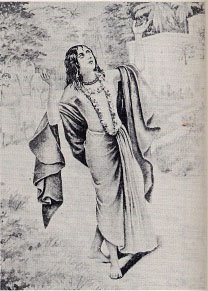
Lord Sri Krishna Chaitanya Mahaprabhu, the Great Apostle of love of God and the Father of the Sankirtan Movement, advented Himself in the City of Nabadwipa in Bengal, India. This was in February, 1486, by Christian reckoning.

By the will of the Lord there was a lunar eclipse on that evening. It is the custom of the Hindu public to bathe in the Ganges of any other sacred river during the hours of eclispe, and to chant the Vedic mantras for purification. When Lord Chaitanya was born during the eclipse, then, the whole India was roaring with the holy sound of Hare Krishna, Hare Krishna, Krishna Krishna, Hare Hare/ Hare Rama, Hare Rama, Rama Rama, Hare Hare.

These sixteen Names of the Lord are mentioned in many Puranas and Upanishads, and they are described as "Tarak Brahman," the Names for this age. It is stated in the "Shashtras," the accepted Scriptures, that offenseless chanting of the Holy Names of the Lord can deliver a fallen soul from material bondage. There inumerable Names for the Lord both in India and elsewhere, and all of them are equally good because all of them indicate the Supreme Personality of Godhead. But because these sixteen Names are especially recommended for this Age, called Kali Yuga, it is better for people to take the path of the great Acharyas, the saintly teachers who attained success by practice of this system.

This coincidence of the Lord's Appearance and the lunar eclipse make it clear what the mission of the Lord was to be. That mission was to preach the importance of chanting the Holy Names of God in this Age of Kali, or Quarrel. The present age witnesses quarrel even over trifling things, and therefore the Shastras have recommended that a common platform can be found in the performance of Kirtan, also called Sankirtan, the congregational chanting of the Holy Names of the Lord. Accompanied by melodious music and dancing, people can hold meetings, Kirtans, for glorifying the Lord in their respective languages. And if such performances are executed in an offenseless manner, it is sure and certain that such persons will gradually attain spiritual perfection without any of the effort of undergoing rigid methods of Yoga or asceticism.

During Sankirtan the learned and the fool, the rich and the poor, the Hindu and the Moslem, the Englishman and the Indian, the common man and the priest—all can give aural reception to the transcendental sound vibration of Hare Krishna, and thereby cleanse the dust from the mirror of the mind.

In the Srimad Bhagavatam it is stated that, "in this Age of Kali, people who are endowed with sufficient brain substance will worship the Lord and His associates by performance of Sankirtan Yajna (sacrifice)." So Lord Chaitanya and His inauguration of the Sankirtan Movement were not concotions, but present the fulfillment of what is stated in revealed Scripture, just as the Appearance of Lord Buddha, Shankara Acharya and all such Avatars are foretold in Vedic literature. And to confirm the Lord's mission, all the people of the world will accept the Holy Name of God as the common platform for the Universal Religion of Mankind.

The Advent of the Holy Name thus took place along with the Advent of Lord Sri Chaitanya Mahaprabhu. When the Lord was on the lap of His mother, the Child would at once stop crying as soon as the ladies surrounding Him chanted the Holy Name, clapping their hands. This peculiarity was observed by the neighbors of the Lord with awe and veneration. Sometimes the young ladies took pleasure in making Him cry, so that they could stop Him by chanting Hare Krishna, Hare Rama. From His very childhood, then, the Lord began to preach the importance of the Holy Name.

At the age of 16 He becamse the greatest scholar in all India, know as Nimai Pandit. He was then married with great pomp, and began to preach the Hare Krishna Movement as Nabadwipa. Some of the Brahmins there soon became envious and put many hindrances in His path, at length complaining to the Moslem magistrate about Him. The Kazi, as the official was called, took these complaints seriously, and he at first warned the followers of Lord Chaitanya not to chant the Name of Krishna loudly. But Lord Chaitanya asked His followers to disobey the orders of the Kazi, and they went on with their Sankirtan parties as usual.

The Kazi then sent constables who broke some of the mrdangas (drums) while Sankritan was taking place. When Lord Chaitanya hard of this, He organized a civil disobedience movement at Nabadwipa. He was the pioneer of civil disobedience in India—and for the right cause. He organized a procession of a hundred thousand men, with thousands of mridangas and khartals (hand cymbals), and the procession passed over the roads of Nabadwipa without any fear of the Kazi.

At length the party reached the house of the Kazi, who fled upstairs in fear of the masses. The men assembled there showed hot tempers, but the Lord asked them to be peaceful. At this the Kazi came down, and a very nice discussion was held, concerning the Koran and the Hindu Shastras.

The Kazi questioned the Lord about cow sacrifice, which is prescribed in the Vedas, and the Lord replied that the method mentioned in the Vedas is not cow killing. In that sacrifice and old bull or cow is killed to give it freah, younger life by the power of the Vedic mantras. In the Kali Yuga, however, such cow sacrifice is forbidden an account of the absence of learned brahmins who can conduct the ceremony. In the Kali Yuga all sacrifices are forbidden because they are useless attempts when undertaken by the unlearned. In the Kali Yuga only the Sankirtan form of sacrifice is recommended for all practical purposes.

The Kazi was convinced by the authority of Lord Chaitanya, and at once became a follower of the Lord. He declared that, thenceforward, nobody might hindrances in the way of the Hare Krishna Movement.

Following tis incident, the Lord began to preach and propagate Sankirtan more vigorously than ever. In the course of His preaching work, He used to send out all His followers every day, including Srila Nityananda Prabhu and Thakur Haridas, two chief figures of His party. They would go from door to door and preach the cult of Srimad Bhagawatam, the science of love of Krishna. One day, as they were out on the road, these two cam upon two brothers named Jagai and Madhai. Born the sons of a respectable brahmin, the brothers has fallen to the most despicable position through low association. They were debauchees of the first order, meat eaters, woman hunters, and dacoits.

At once, upon learning of these two, Thakur Harida and Nityananda Prabhu decided that, if they could be delivered by the Holy Name, Lord Chaitanya would be all the more glorified. With this in mind they at once approached the two brothers, requesting them to chant the Holy Name of Krishna. The drunked brothers became enraged at this, however, and attacked Nityananda Prabhu. Both Nityanana Prabhu and Haridas Thakur hurriedly left the place, with the drunkards chasing them for a considerable distance.

The next day Nityananda Prabhu again came to see the brothers, but as soon as he approached them he was struck on the head with a piece of earthen pot, and blood spilled forth. Srila Nityanada Prabhu was so kind toward them that instead of protesting against their heinous act, he said, "It doesn't matter that you have thrown things at me. Still I request you to chant the Holy Name of the Lord."

One of the brothers was atonished at this behavior of Nityananda Prabhu, and he at once fell down at his feet, asking pardon for his sinful brother. The other was again attempting to hurt him, but Jagai checked him and implored hom to also fall down at the feet of Nityananda Prabhu.

Meanwhile the Lord, having heard of His devotee's injury, at once rushed to the spot determined to kill the pair, but Nityananda Prabhu reminded Him of His mission—namely, to deliver the hopelessly fallen soulds of the Kali Yuga. The brothers Jagai and Madhai were, after all, typical examples of the present day population. Because of Nityananda's intervention, and due to their own sincere surrender at that pure devotee's feet, Lord Chaitanya at length was pacified, and the brothers became welcome devotees of God.

For this purpose of delivering the debased population of the Kali Yuga, Lord Chaitanya appeared, and out of His causeless mercy He gave us the simple method of self realization: chanting the Holy Name of God: Hare Krishna, Hare Krishna, Krishna Krishna, Hare Hare/ Hare Rama, Hare Rama, Rama Rama, Hare Hare. And, He said, there is no other way in this era.

When the Lord was once asked by the great Mayavadi sannyasi, Prakashananda Saraswati, what was the reason for His diversion to the Sankirtan Movement, instead of studying the Vedanta Sutras as is the duty of a sannyasi, the Lord replied very humbly as follows:

"The reason for My diversion to the Sankirtan Movement from the study of Vedanta is that I am a great fool. And, because I am a great fool, My Spiritual Master forbade Me to play with Vedanta philosophy. He said it would be better for me to chant the Holy Name of the Lord, and that that would deliver Me from material bondage.

"In this Age there is no religion other then glorifying the Lord by the utterance of His Holy Name, and that is the injunction of all the revealed Scriptures. So on the order of my Spiritual Master I chant the Holy Name of Krishna, and I am now mad after this Holy Name. Whenever I utter it, I forget myself completely: sometimes I laugh, somtimes I cry, and sometimes I dance like a madman. I thought within Myself that I may have actually gone mad by this process of chanting the Holy Name, and there fore I inquired from My Spiritual Master about it. I told Him, 'I have become mad by chaning the Holy Name. What does this mean" Please let me know.'

"My Spiritual Master then informed me that it is the real effect of chanting the Holy Name that it produces transcendental emotion, which is a rare manifestation. This transcendental emotion is the sign of love of God, which is the ultimate end of life. The love of God is transcendental even to liberation (mukti), and as such it is called the fifth stage of spiritual realization—standing above the stage of liberation. The actual result of chanting the Holy Name of Krishna is to attain the stage of love of God, and it was good that I was favored with such a blessing."

Although Lord Chaitanya is Krishna Himself, for our example He has presented Himself as a great fool. God is full in six opulence, including all knowledge, and therefore He is never a fool. We can, hoever, follow the merciful example of Lord Chaitanya and take up this chanting with all determination, and we will in that way reach the ultimate perfection of life, which is love of God. Everything is there. We need only accept what is coming down to us in the line of disciplic succession from Krishna and from Lord Chaitanya.

When the Lord was traveling through the jungles of Jhalikanda (Madhya Bharat) on His way to Vrindaban, all the wild animals also joined with His Sankirtan Movement. The wild tigers, the elephants, bears, and deers all accompanied the Lord, and the Lord attracted them into His Sankirtan Movement. By this He proved that, bu propagation of the Hare Krishna Movement, even the wild beasts can live together in peace and friendship—what to speak then of men, who are supposed to civilized? No man in the world will refuse to join the Sankirtan Movement when he actually understands it, nor can the Lord's Sankirtan Movement have any restriction of caste, creed or color. Herein is direct evidence of the greatness of His mission, for He admitted even the wild animals to partake in Sankirtan.

So, although the Lord was the greatest scholar of Vedanta at the meager age of 16 years, still His only request was that, in this Age of Kali, you simply chant Hare Krishna and your life will be sublime.

Lord Chaitanya left only 8 slokas, or verse, of His instructions to the general mass of people, which are known as Sikshastak. These are included herein:

one
Glory to Sri Krishna Sankirtan, which cleanses the heart of all the dust accumlated for many years. Thus the fire of conditional life, or repeated birth and death, is extinguished. This Sankirtan Movement is the prime benediction for humanity at large because it spreads the rays of the benediction Moon. It is the life of all transcendental knowledge, it incrases the ocean of transcendental bliss, and it helps us taste the full nectar for which we are always anxious.

two
O my Lord! Your Holy Name alone can render all benediction upon the living beings, and therefore You have hundreds and millions of Names You have invested all Your transcendental energies , and there is no hard and fast rule for chanting these Holy Names. O my Lord! You have so kindly made approach to You easy by Your Holy Names, but unfortunate as I am, I have no attraction for Them.

three
One can chant the Holy Name of the Lord in a humble state of mind, thinking oneself lower then the straw in the street, more tolerant than the tree, devoid of all sense of false prestige, and ready to offer all respects to others. In such a state of mind once can chant the Holy Name of the Lord constantly.

four
O almightly Lord! I have no desire to accumulate wealth, nor have I any desire to enjoy beautiful women, neither do I want any number of followers of mine. What I want only is that I may have your causeless devotional service in my life—birth after birth.

five
O Son of Maharaja Nanda, I am Your eternal servitor, and although I am so, somehow or other I have fallen into the ocean of birth and death. Please, therefore, pick me up from this ocean of death, and fix me as one of the atoms of Your Lotus Feet.

six
O my Lord! When shall my eyes be decorated with tears of love, flowing constantly while I chant You Holy Name? When will my words be choked up when uttering the Holy Name? And when will all the holes of hair on my body have eruptions by the recitation of Your name?

seven
O Govinda! Feeling Your seperation, I am considering a moment to be like twelve years or more, and tears are flowing from my eyes like torrent of rain. I am feeling all vacant in the world, in the absence of You.

eight
I do not know anyone except Krishna as my Lord, and He shall always remain as such, even if He handles me roughly by His embrace; or He may make me broken-hearted by not being present before me. He is completely free to do anything and everything, but He is always my worshipable Lord, unconditionally.

Tuesday, September 19, 2006

Approaching Krsna with Love


When Krsna was on this earth, all the residents of Vrndavana loved Him. Indeed, they knew nothing but Krsna. They did not know whether Krsna is God or not God, nor were they disturbed by such thoughts as, "I shall love Krsna if He is God." Their attitude was one of pure love, and they thought, "He may or may not be God—it doesn't matter. We love Krsna, that's all."

This then is the platform of real unalloyed love. When one thinks, "If Krsna is God, I shall love Him," it should be known that this is not the platform of pure love but of conditional love. While on earth, Krsna exhibited extraordinary powers, and the vrajavasis, the residents of Vrndavana, often thought, "Oh, Krsna is such a wonderful child. Maybe He is some demigod." They thought in this way because people were generally under the impression that the demigods were all-powerful.

Within the material world the demigods are powerful, but people are not aware that Krsna is above all of them. The highest of the demigods, Brahma, gave his opinion of this matter in the verse isvarah paramah krsnah sac-cid-ananda-vigrahah: "Krsna is the Supreme Controller, and His body is full of knowledge, bliss and eternality." Little did the residents of Vrndavana know of Krsna's power as the ultimate controller and master of all the demigods. What is noteworthy is that their love for Him was not subject to such considerations.

As the residents of Vrndavana loved Krsna unconditionally, similarly Krsna loved them unconditionally. Vraja-jana-vallabha, girivaradhari. When the inhabitants of Vrndavana stopped performing sacrifices to Lord Indra, the chief demigod of the heavens, they placed themselves in a very dangerous position. Indra became very angry and sent powerful clouds which rained over Vrndavana incessantly for seven days. The whole area began to flood, and the inhabitants became very disturbed. Although He was only seven years old, Krsna saved the inhabitants of Vrndavana by lifting Govardhana Hill and holding it up as an umbrella to shield the village. Lord Krsna thus taught the demigod Indra that his disturbances could be stopped simply by His little finger. Seeing this, Lord Indra bowed down before Krsna.

Thus Krsna also became known as Gopi-jana-vallabha which indicates that His only business is to protect the gopijana. This Krsna consciousness movement aims at teaching people how to become gopijanas, or pure lovers of Krsna. When we reach that stage of pure love of God, the Lord will save us from any danger, even if it means His lifting a hill or a mountain. Krsna did not have to practice some yoga system in order to lift Govardhana Hill. As God, He is all-powerful, even as a child. He played like a child and dealt with others like a child, but when there was need, He manifested Himself as God Almighty. That is the nature of Krsna, or God: He does not have to practice meditation or follow some system of yoga in order to become God. He is not a manufactured type of God but is God eternally.

Although He is God, He enjoys loving relationships with His devotees, and in order to satisfy His devotees, He often takes roles that appear to be Subsidiary. Krsna often likes being the child of a devotee, and thus He became the beloved child of Yasoda, Yasodanandana. Because He is God and everyone worships Him, no one chastises Him. However, Krsna enjoys being chastised by His devotee father and mother, and because Krsna takes pleasure in being chastised, the devotees also take up the role, saying, "All right, I shall become Your father and chastise You." Similarly, when Krsna wants to fight, one of His devotees becomes the demon Hiranyakasipu and fights with Him.

In this way, all Krsna's activities are carried out in connection with His devotees. If we aspire to become such associates of Krsna, we must develop Krsna consciousness, awareness of Krsna. Yasoda-nandana vraja jana-ranjana. Krsna's only business is satisfying the vrajajanas, and their only business is satisfying Krsna. This is the reciprocation of love. Yamuna-tira-vanacari: Krsna, the Supreme Personality of Godhead, wanders on the banks of the Yamuna to please the gopis, the cowherd boys, the birds, the bees and the cows and calves. These are not ordinary birds, bees, cows, calves or men; they have all reached the summit of self-realization and thus, after many, many lives, have attained a position whereby they can play with Krsna. This Krsna consciousness movement can enable everyone to go to Krsnaloka and become Krsna's associate as a friend, servant, father or mother. Krsna is agreeable to take any of these positions in relation to His devotee.

How He does so is all described in our book, Teachings of Lord Caitanya. To realize our relationship with Krsna, we have but to follow in the footsteps of Lord Caitanya and His chief associates, the six gosvamis—Sri Rupa, Sanatana, Sri Jiva, Gopala, Raghunatha Dasa and Raghunatha Bhatta. These gosvamis were always engaged in chanting Hare Krsna and dancing in ecstasy. They taught that when one is merged in Krsna-kirtana, or the chanting of the holy names of Krsna, he merges into the ocean of love of Krsna. As soon as the sound of Krsna's name is vibrated, one can immediately merge into the ocean of love. That is the sign of pure devotion. Thus at kirtanas the six gosvamis would merge immediately into the ocean of love of Godhead.

The six gosvamis were not only dear to the other devotees of Lord Caitanya Mahaprabhu but to the nondevotees as well. A pure devotee's position is that he has no enemy because he is not envious. A pure devotee is always open to everyone, and he does not discriminate that this person can be allowed to chant Hare Krsna and that person should not be allowed. On the material platform, which is a platform of dualism, there are differences between high and low, man and woman, and this or that, but on the spiritual platform there are no such distinctions. The pure devotee, seeing everything with an equal mind, is therefore nonenvious. Because he is nonenvious, he is worshipable. Indeed, it may even be said that a person is worshipable simply if he is nonenvious, for it is only possible to be nonenvious on the spiritual platform. This is also the verdict of Bhagavad-gita:

vidya-vinaya-sampanne
brahmane gavi hastini
suni caiva sva-pake ca
panditah sama-darsinah

ihaiva tair jitah sargo
yesam samye sthitam manah
nirdosam hi samam brahma
tasmad brahmani te sthitah

"The humble sage, by virtue of true knowledge, sees with equal vision a learned and gentle brahmana, a cow, an elephant, a dog and a dog-eater (outcaste). Those whose minds are established in sameness and equanimity have already conquered the conditions of birth and death. They are flawless like Brahman, and thus they are already situated in Brahman." (Bg. 5.18-19)

Such a position can be obtained by one who has acquired the mercy of Lord Caitanya. Upon obtaining His mercy, a person can deliver suffering humanity from material contamination. Because the six gosvamis were such devotees, we offer our respectful obeisances unto them with the mantra: vande rupa-sanatanau raghu-yugau sri-jiva-gopalakau. The six gosvamis were expert in scrutinizingly studying all the scriptures with the aim to establish real religion in the world. They left many books to guide us, the most famous of which is Sri Rupa Gosvami's Bhakti-rasamrta-sindhu (The Nectar of Devotion), which gives the neophyte devotee initial direction. The gosvamis always worked very hard, day and night, and their business was simply writing books, chanting and dancing. Indeed, they were practically released from the bodily necessities of eating, sleeping, mating and defending themselves out of fear. There was no question of mating at all, nor was there any question of fearing or defending, for they were totally absorbed in Krsna. At most they used to sleep one and a half hours daily, and they ate practically nothing. Whenever they felt hungry, they would simply go to a householder's home and beg one or two pieces of bread.

The mission of such saintly persons is but to make suffering humanity happy by elevating everyone to spiritual consciousness. In the material world, everyone is trying to exploit one another-one nation is trying to exploit another nation, one society is trying to exploit another, one businessman is trying to exploit another, etc. This is called the struggle for existence, and out of it the people who are struggling have invented a law called "might is right," but we can actually see that even the most powerful must struggle, just as in the current world situation. There is a great struggle going on between Russia, America and China. Because of such struggle, everyone is suffering. Indeed, the very struggle for existence means suffering. The pure devotees of Krsna, however, are not interested in exploiting others but in helping people become happy, and therefore they are worshiped on all planets. Canakya Pandit even said that a rich man and a learned man cannot be compared because a rich man may be honored in his own country or on his own planet, but a learned man, a devotee of God, is honored wherever he goes.

Nor for a devotee is there a distinction between heaven and hell, because Krsna is with him in both places. Where there is Krsna, there is no question of hell; every place is Vaikuntha. Haridasa Thakura, for instance, didn't enter Jagannatha Temple at Puri because he was born in a Mohammedan family, and the Hindus opposed the Mohammedans entering the temple. Haridasa Thakura did not let this disturb him, however. He thought, "Oh, why should I go and disturb them? I shall chant here." Consequently Lord Caitanya, who is Lord Jagannatha Himself, came daily to see Haridasa. This is the power of a pure devotee: He doesn't have to go to Jagannatha; Jagannatha comes to him. Lord Caitanya Mahaprabhu used to go see Haridasa Thakura daily when the Lord was going to bathe in the sea.

The Lord would enter Haridasa's cottage and ask, "Haridasa, what are you doing?" and Haridasa would reply, "Please come in, my Lord." This then is the actual position of a devotee. Therefore Krsna says that worship of His devotee is even more valuable than worship of Himself. The devotee is actually able to deliver Krsna, for he knows the science of Krsna consciousness, the science of hearing Krsna's words, eating Krsna prasadam and enjoying Krsna. The impersonalists and voidists may preach dry philosophical treatises on aham brahmasmi—"I am spirit"—but ultimately who will be attracted? What is the difference between someone who thinks, "I am a stone," and someone who thinks, "I am void?" Why should we become stone, wood or void? Our actual position should be in reciprocating loving affairs with Krsna.

The spark for love of Krsna is struck by the spiritual master, the pure devotee. As for myself, my spiritual master, His Divine Grace Om Visnupada Bhaktisiddhanta Sarasvati Gosvami Prabhupada, ordered me to take up the responsibility of spreading Krsna consciousness in the Western world. His Divine Grace had a great desire to preach Lord Caitanya's message in the West, and my success is both his grace and pleasure. When I first met my spiritual master, I was a very young man in India, a nationalist, engaged in a very responsible office. But although I did not want to go; one of my friends, who is still living in Calcutta, forcibly took me to His Divine Grace. I was reluctant to see him because in our home our father used to receive many sannyasis, and I was not very satisfied with their dealings. I thought that Bhaktisiddhanta Sarasvati Gosvami Maharaja might be a similar man, and if he were, what business would I have in seeing him? But my friend took me forcibly. "Why not see him?" he asked. I finally relented and went with him, and I profited.

On my first visit, His Divine Grace said that it was necessary for educated boys like me to go to foreign countries and preach the gospel of Caitanya Mahaprabhu. I replied that India was a foreign dominated nation and that no one would hear our message. Actually at the time foreigners considered Indians to be very insignificant because in the face of so many independent nations India was still dependent, being dominated by Britain. At the time there was one Bengali poet who actually lamented that even uncivilized nations like China and Japan were independent, whereas India was dependent on the British. His Divine Grace convinced me that dependence and independence are simply temporary conditions, and he pointed out that because we are concerned with the eternal benefit of humanity, we should take up this challenge of Caitanya Mahaprabhu. This meeting with His Divine Grace, my Guru Maharaja, took place in 1922, half a century ago.

I was officially initiated in 1933, just three years before the passing of Guru Maharaja from this mortal world. At the last moment, just a fortnight before his passing away, he wrote me a letter repeating his instructions. He specifically said that I should try to preach this gospel amongst English speaking people. After receiving this letter, I sometimes dreamed that Guru Maharaja was calling me and that I was leaving home and following him. I was dreaming in this way and thinking, "I have to give up my home. My Guru Maharaja wants me to give up my home and take sannyasa. " At the same time I thought, "This is horrible. How can I leave my home? My wife? My children?" This is called maya. Actually I did not want to give up my home life, but Guru Maharaja made me give it up. Following his orders, I left my home, including a few children, but now Guru Maharaja has given me many nice children all over the world. Thus by serving Krsna no one becomes a loser, and this is an example from my own practical experience.

When I left India alone in 1965, I feared that I would have a great deal of trouble. The Indian government would not allow me to take any money out of the country, so 1 came with only a few books and fourteen rupees. I arrived in New York City in such a condition, but it was all by the grace of Guru Maharaja and Krsna. Everything happens by the combined mercy of Krsna and the spiritual master. In Caitanya-caritamrta it is stated that the mercy of Krsna and guru are combined. This is the secret of the success of this Krsna consciousness movement.

Krsna is always within us, and consequently He knows everything about our purposes, and He gives us the opportunity to work as we decide. If we decide to enjoy this material world, Krsna gives us the intelligence to become a very shrewd businessman, or a popular politician, or a cunning man so that we can earn money and enjoy ourselves. According to the standards of material life, many people are becoming great. They begin as very poor men and soon, by good fortune, become millionaires. We should not think, however, that they are attaining such success by their own puny endeavors. Without intelligence, no one can improve, and that intelligence is given by Krsna. In Bhagavad-gita Krsna states that He is seated in everyone's heart as the Supersoul and that by His will a man can remember, and by His will a man can forget. Krsna supplies forgetfulness and remembrance according to the living entity's desire. If we want to forget Krsna and enjoy the material world, He will give us the necessary intelligence so that we can forget Him for good.

Many people are thinking, "I can enjoy this material world very nicely. Everyone is having such a good time.

There is no reason I can't enjoy myself as much as them." This idea is illusion because there is no real enjoyment in the material world. We may rise to a very high position like President Kennedy. We may be very good looking, very famous, very intelligent and well educated, very wealthy and very powerful, and we may have a very beautiful wife and children and hold the highest position in the country but at any moment we are subject to be shot down. This is the nature of the material world: We have to face danger at every step. There is no question of having pleasure without impediments. Even when the pleasures are earned, they are earned after a great deal of struggle and sacrifice, and whatever pleasure may be acquired is temporary, for in the material world there is no pleasure that can give us constant and unending enjoyment. Only Krsna can give us that.

Therefore Krsna instructs in Bhagavad-gita that it is the welfare of every living entity to give up this nonsensical material activity and just surrender unto Him. Unfortunately, in this age people are so attracted by the glitter of material nature, to illusion, or maya, that they are not very interested. Krsna even declares that if one surrenders unto Him, He will give all protection from all sinful reactions, but still people are so attached that they cannot do it. People always fear that by surrendering to Krsna they will lose something, just as I feared losing my family by going to the Western world and preaching. But Krsna is so kind that if He takes anything away, He will reward us a thousand-fold.

The spiritual master is also kind in that he begs from door to door, country to country, town to town: "My dear ladies and gentlemen, my dear boys and girls, please take to Krsna consciousness." In this way he renders very confidential service to Krsna. Krsna is the Supreme Lord who gives the orders, and the spiritual master executes those orders; therefore the spiritual master is very dear to Krsna. Whether Krsna sends him to heaven or to hell makes no difference to him. For the spiritual master, a pure devotee, heaven and hell are both the same if there is no Krsna consciousness. In hell people are suffering in so many ways, and in heaven they are enjoying their senses in so many ways, but a devotee of the Lord can live anyplace where there is Krsna consciousness, and since he brings this consciousness with him, he is always self-satisfied. If he is sent to hell, he will be satisfied simply chanting Hare Krsna. In fact, he does not believe in hell but in Krsna. Similarly, if he were put in heaven, where there are so many opportunities for sense gratification, he would also remain aloof, for his senses are satisfied by Krsna Himself. Thus for the service of the Lord a devotee is prepared to go anywhere, and for this reason he is very dear to Krsna.

Renounced impersonalist philosophers say that this world is false and that the impersonal Brahman is truth. But if they are asked to go out into society where material sense gratification predominates, they will refuse for fear of being affected by those conditions. For a Krsna conscious person, however, there is no such difficulty. Because he is controlled and has taken shelter of Krsna, he is not afraid of going anywhere.

Consequently when devotees meet in a place where there is no Krsna consciousness, there is no harm, for they take the opportunity to chant Hare Krsna and infuse the place with Krsna consciousness. This opportunity should always be taken. It is not that one should close himself up in a room and chant alone. The great sage Narada is a spaceman who travels all over the universe. Although he can dwell in the most elevated planets, he sometimes goes to hell and preaches there. That is the beauty of a servant of God—he is always acting out of love for Krsna and His parts and parcels.

The underlying principle of devotional service is unalloyed love for Krsna. Regardless of the position of a particular devotee—as friend, servant, parent or lover of Krsna—his service is unconditional, for Krsna consciousness is not dependent on any material condition. It is transcendental and has nothing to do with the modes of material nature. A devotee is not afraid to go anywhere, and because of this he sees all material conditions as equal. In the world we may say that this is a good place to be and that is a bad, but, as pointed out before, the devotee is not subject to these mental concoctions. For him the basic principle of material existence is bad, for material existence means forgetfulness of Krsna.

In the neutral stage of devotion one may give more importance to the impersonal bodily effulgence of the Lord and to the Supersoul within the heart, but Krsna consciousness actually develops when one thinks, "Krsna is my very intimate master of intimate relationships." In the beginning, of course, impersonal realization and realization of the Supersoul are part of Krsna consciousness. The partial realization of God in His impersonal aspect or in His aspect as Supersoul enables one to develop veneration of the Lord, but when one has an intimate relationship with Krsna as a friend, master, son or lover, then the veneration disappears.

This platform of personal relationship is certainly higher than the impersonal platform or the platform of Supersoul or Paramatma realization. In the neutral conception, one simply realizes that he and the Absolute Truth are one in quality, or he realizes that he is part and parcel of the Supreme. That is certainly knowledge, for when one develops a personal relationship with Krsna as servant and master, he begins to appreciate the full opulence of the Supreme Lord. One who realizes that God is full in six opulences actually begins rendering service. As soon as one becomes aware of the greatness of Krsna and understands Krsna's superiority, his service begins. The awareness of God's greatness increases when transcendental service is rendered. A person who serves the Lord in order to satisfy the senses of the Lord becomes satisfied because Krsna is the Supersoul, and the individual living entity is His part and parcel. If He is satisfied, then the living entity is satisfied. If the stomach is satisfied, then all the parts of the body are satisfied, for they receive nourishment through the stomach. When one of my Godbrothers began to fan Guru Maharaja on a very hot day, Guru Maharaja asked, "Why are you fanning me all of a sudden?" The boy replied, "Because if you are satisfied, we are all satisfied." This is the formula—we should not try to satisfy our senses separately but should try to satisfy Krsna's senses. Then naturally we will become satisfied.

A Krsna conscious person is always trying to give satisfaction to Krsna, and this is the beginning of Krsna consciousness. Because in the impersonal conception there is no form of God, there is no opportunity to satisfy His senses. However, one who sees Krsna as master can render service.

In Bhagavad-gita Krsna is referred to as Hrsikesa, master of the senses. When it is understood that the Absolute Truth is the master of the senses, that our senses are products of His senses and that they should therefore be utilized for the satisfaction of His senses, Krsna consciousness, which is dormant within everyone, begins to awaken. Once Caitanya Mahaprabhu asked, "What is the difference between the neutral position in relation to Krsna and the relationship of master and servant?" In both cases one can understand that Krsna is great, but in the neutral position there is no inclination for service. Therefore the master-servant relationship between Krsna and the living entity is more elevated.

Then when one attains friendship with Krsna, another transcendental quality is added. There is the conception that God is great and that service must be rendered unto Him, but there is also an extra feeling: "Krsna is my friend. Therefore I must treat Him in such a way that He will be happy." With a friend we are not simply content with rendering service but in making him actually happy and satisfied. There is also equality in such a relationship, for Krsna and the devotee relate on equal terms.

Thus devotees in this position actually forget Krsna's superiority. When Krsna's boy friends used to ride on Krsna's shoulders playing games, they did not think that they were greater than Him. There is no question of sense gratification or self-glorification, for the relationship is based on pure love. The devotee's only desire is to give pleasure to Krsna, and Krsna also takes His friends on His shoulders to derive pleasure from them. Sometimes a person simply accepts the fact that his friend will slap his face but there is no question of inferiority in such an action. When friendship and mutual pleasure are the basis of the relationship, there is no question of insult or inferiority.

The whole basis of Krsna consciousness and a relationship with Krsna is the pleasure potency of Krsna Himself. Srimati Radharani, the damsels of Vraja and Krsna's cowherd boy friends are all expansions of Krsna's pleasure potency. We all have a tendency toward pleasure because the source from which we emanate is fully potent in pleasure. Impersonalists cannot think in these terms, for they deny the pleasure potency; therefore the impersonalist philosophy is incomplete and inferior. Those who are in Krsna consciousness recognize the pleasure potency in Krsna and in all His paraphernalia—His friends, servants, father, mother and consort. All relationships with Krsna which aim at satisfying Krsna's senses are manifestations of Krsna's pleasure potency.

As far as the individual soul is concerned, it is originally a part and parcel of this pleasure potency, of the reservoir of pleasure Himself. However, due to contact with material nature, the soul has forgotten its actual position and has become trapped in the evolutionary process of transmigration from one body to another. Thus one struggles hard for existence. Now we must extricate ourselves from the sufferings of the struggle, from the countless transmigrations that force us to suffer the miseries of birth, old age, disease and death, and come to the point of our eternal life in Krsna consciousness. That eternal life is possible.

If one tries his best in this human form of life, in his next life he will get a spiritual body. The spiritual body is already within the gross material body, but it will develop only as soon as one becomes free from the contamination of this material existence. That is the aim of human life and the actual self-interest of all people. Self-interest is actually realizing, "I am part and parcel of God. I have to return to the kingdom of God and join with Him." Just as we have a social life here, God has a social life in the spiritual kingdom, and we can join Him there. It is not that after finishing this body we become void. In Bhagavad-gita Krsna told Arjuna, "Never was there a time when I did not exist, nor you, nor all these kings, nor in the future shall any of us cease to be." (Bg. 2.12) Our existence is therefore eternal, and the changes of birth and death are simply the changes of the temporary material bodies.

The actual process for achieving eternal life is not at all difficult. This process of Krsna consciousness is based on knowledge received from Krsna, the most perfect being. Knowledge received from others is defective because the conditioned soul is certain to commit mistakes, certain to be illusioned, certain to cheat and certain to have imperfect senses. The knowledge received from Krsna, however, actually enables us to see Krsna. Someone may challenge, "Can you show me God?" and our answer is, "Yes. God can be seen at every moment." Krsna says, raso'ham apsu kaunteya: "I am the taste of water." We drink water every day, and the taste of water is there, so if we think of this taste as Krsna, we will have begun realizing God every day. In Bhagavad-gita Krsna further says, prabhasmi sasi-suryayoh: "I am the light of the sun and the moon." Every day we receive sunlight, and in the evening there is moonshine, so if we think of the source of these emanations, we will ultimately become God conscious. There are so many similar instances given in Bhagavad-gita, for Krsna is the beginning, middle and end of all manifestations. If we want to become God conscious and realize our own essence, it is not very difficult. We only have to understand God in truth—how He appears, how He disappears and what His functions are then we can become eligible to enter into the kingdom of God. After quitting this material body, a person who understands God, Krsna, does not return again to earth to accept another material body. Where does he go? Krsna says, mam eti: "He comes to Me." That should be the aim of any intelligent human being.

FROM [Back To Godhead Magazine, 1973, vol.1, number 54]
by His Divine Grace A.C. Bhaktivedanta Swami Prabhupada